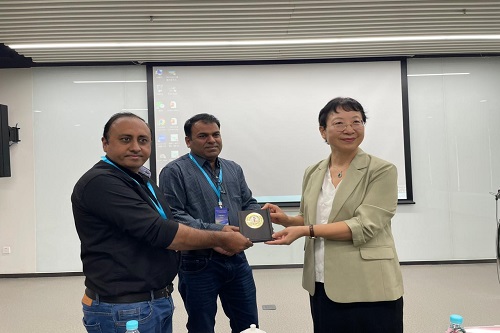
Prof. Fang Wang (Nankai University, Tianjin) delivered a lecture on Data Quality Assessment and Management on 19 Sep. 2025 at XiongAn, China
During my 2-Weeks training at XiongAn, China in September 2025, Prof. Fang Wang (Nankai University, Tianjin) delivered a lecture on Data Quality Assessment and Management on 19 Sep. 2025 at XiongAn, China. Following are some details on this lecture.
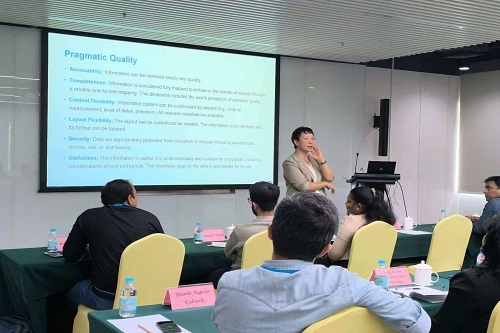
The lecture on data quality emphasized that quality is not an absolute concept but rather the extent to which data meets the characteristics required for a specific use case. What counts as "high-quality data" can differ across domains. For example, in business and marketing, quality data enables precision marketing, personalized recommendation systems, dynamic pricing, revenue management, and supply chain optimization. In the public sector, it supports smart cities, traffic management, and public safety, while in healthcare it underpins disease prediction, hospital management, and epidemic control. Similarly, navigation systems and travel services rely heavily on trustworthy, accurate data.
A major challenge is that data is often messy, erroneous, or inconsistent, making it less usable. Poor-quality data can lead to financial losses, operational inefficiencies, and strategic risks. To address this, data quality must be ensured through structured processes, organizational measures, and technological tools. Evaluation typically involves dimensions such as accuracy, completeness, consistency, timeliness, authenticity, validity, accessibility, credibility, and interpretability. Additional considerations include data lineage (tracking origins and transformations) and distinctions between recorded data and metadata, or between master, reference, and analytical data. Data quality can further be analyzed in terms of pragmatic, semantic, and syntactic quality.
The lecture also linked data quality management (DQM) with data governance. While governance specifies decision rights, accountability, standards, and roles, DQM provides the practical support through processes, tools, and metrics. Frameworks like the DAMA Data Management Framework and closed-loop models such as Plan-Do-Check-Act (PDCA) help organizations move from reactive to proactive management of data quality. Success also depends on HR management-developing the skills and knowledge required among personnel to uphold data quality standards.
Finally, emerging technological frontiers are reshaping data quality practices. Organizations now employ integration tools, metadata management, and quality management systems to maintain reliable datasets. In finance, for example, institutions establish committees, define rules, and select specialized tools for quality assurance. Looking ahead, challenges such as unstructured data quality, data quality-as-a-service (DQaSS), and the integration of AI into data quality workflows will require new approaches to maintain trust, usability, and value in data-driven systems.
Context:A two weeks training titled "International Training Program on Policies and Applications of Government Data Governance in Belt and Road (B&D) Countries" (14-28 September, 2025) was held at XiongAn New Area, China. The training was hosted by the Department of International Cooperation of the Ministry of Science and Technology, organized by Institute of Scientific and Technical Information of China (ISTIC) and co-organized by UNESCO-IFAP China National Committee, UNESCO IFAP Information for Development Working Group (IDWG) and XiongAn Group Digital City Company.
The training included 14 participants from eight countries-China, Pakistan, Sri Lanka, Brazil, Kazakhstan, Zambia, Iran, and Indonesia-representing a wide range of expertise, including public administration, computer science, international relations, environmental science, data governance, industrial management, information science, and international communication.